


How trauma has shown up for me as a health coach , PT and business owner


As a health coach or fitness professional, what if you have experienced life trauma? How might that influence your practice and what barriers might you face?
I don’t think that this is spoken about enough. It’s something I have become aware of due to personal experience of trauma, both in childhood and later in life.
There is a narrative that surrounds trauma survivors that can make people feel like they are 'not good enough' or too delicate and won’t be seen as able to make a valuable contribution. This is far from true and given the right circumstances, anyone can thrive. In fact, it is often those who have survived the most challenging life experiences who are best placed to overcome hurdles.
As with all these posts, I will avoid generalising. In this post, I will specifically refer to my own experience. It is important to remember that we are all unique and no one-size-fits-all description will encompass any trauma survivor, although there will of course be common experiences.
So, the thousand-dollar question might be, is it better to address the trauma before you embark on a career/ start a business? Well, the truth is, in an ideal world, maybe. But in the real world, life doesn’t work that way. Unfortunately, trauma is classically unrecognised, undiagnosed and unsupported. There is not a period of grace that we are given whereby we have 6,12 months to work on our inner healing. Life goes on, bills need to be paid.
Certainly, my own experience is that I did not realise how much I had been impacted by trauma until I began to learn about trauma through voluntary and paid work I have done in recent years and through extensive reading around the subject and studying. It was during this time that several ‘a-ha’ moments of clarity emerged - thus healing has been a journey.
I have never had specific trauma therapy (which is neither easy nor cheap to come by) but instead have engaged with several different therapies including Cognitive Analytical Therapy, Art Therapy, Person-Centred Therapy, Cognitive Behavioural Therapy. It is because of these experiences and my own research into healing that I have been able to understand the need to develop a sense of safety and also an internal locus of control as well as implementation of boundaries and the cultivation of safe connections with others.
I will explore below some of the hurdles and how these have shown up for me in terms of retraining and launching my business as a personal trainer and health coach.
Firstly, to recap about trauma-
What do we know about the different trauma responses?
Sometimes called 'the four Fs'
Fight - a survival mechanism which is triggered when we perceive a threat or danger and which prepares the body to fight.
Flight - again, a survival mechanism, which prepares the body to ‘run’ from danger.
Freeze - the freeze response is overwhelming, causing the body to freeze instead of running or fighting when faced with danger.
Fawn - the fawn response involves people-pleasing, putting other people's needs first and neglecting personal boundaries and needs.
It is important to note that these are inherent responses - at times they might provide safety and have certainly helped humans to survive.
Fight
This has probably shown up in a positive way in the sense of sheer determination. Although at times it has been mixed with huge amounts of anxiety, sleepless nights, self-doubt and questioning.
I have frequently, throughout my lifespan, pushed beyond my limits and done things which are difficult - which has been a strategy in my life and has enabled me to accomplish my goals, perhaps to 'prove' to myself and the wider world that I can. Certainly it has helped to lower and manage my anxiety in many ways - the more I do, the more I feel able to do.
Nonetheless, this drive can come with consequences and at times mine has been a complete depletion of energy. I often joke about having two gears ‘first or fifth’, but the truth is, some of this has been connected to a trauma response – at times when I have had a clear diary (and when I don’t have my kids), I have felt completely exhausted and overwhelmed and found it hard to do anything at all, reaching the point of burnout.
Over time, I have learnt to put some protections in place and to spot the signs of impending burnout (and even to be able to avoid it completely on occasion). I will talk about emotional and physical safety and the tools I have put into place (such as activation of the parasympathetic nervous system through breathing exercise, meditation and repetitive, low-volume sounds) in the next blog post.
I have realised (through voluntary and paid work and therapy) that I have a huge sense of justice and that it is possible for me to get drawn into fighting for causes and rights at the detriment to my own wellbeing. I try to channel this energy into certain projects because otherwise this tendency can be draining.
I have been asked many times about whether I would consider going into local politics but truthfully, knowing myself well, I would not be able to do this as I would never be able to switch off from taking on and worrying about issues! When I served as school governor many years ago I found that to be challenging enough (so local government, with all of its stresses and difficulties would most likely blow my mind!).
It is also worth knowing that the fight response can be protective – I am certain that being outspoken (especially when I sense injustice) has overridden the ‘fawn’ response at times (more about the fawn response later in this blog post).
Flight
This response has shown up in a psychological resistance to making contact/ reaching out/ making connections for fear of rejection. It is a massive one that I had to overcome but has been essential in terms of building a business network. It is necessary to knock on a lot of doors before one will open – and that can take a toll. It is helpful to know as well that not every connection will be relevant or right – and that is ok and works both ways. I have also found a lot of incoming contacts from businesses that are not relevant to me. I have learnt to be tougher and more discerning about who I connect with and give my time and energy to. I will talk about co-regulation, reciprocity and safety in the next blog post and how this can be a great way for trauma survivors to spot the relationships in business that are worth keeping and those that are giving red flags from the outset.
Freeze
I feel that this response has been tied to the overwhelm that has occurred as a result of overstretching myself in other areas. At times it has seemed difficult to do a very simple task and that has, at times, resulted in a kind of paralysis. I feel fortunate in many ways to have been able to ‘function’ as a trauma survivor insofar as the impact of trauma has never prevented me from keeping a work commitment. It is almost as though when I don’t have work, when my mind is not occupied, that is when such responses as freeze have been likely to manifest. I recognise that this is a whole-body response – perhaps a way of my body enforcing rest.
Fawn
This is where boundaries have become increasingly important. Something that made this more challenging was the experience of having been unemployed. This meant that I would feel the need to accept every bit of work that came my way, no matter the time of day or night or the personal, emotional and physical toll. The way that the Jobcentre system worked was to induce pressure, constant pressure and add to the trauma, meaning that the desire to escape was heightened. My personal pride also played a part as I have always wanted to provide for my children and being in a position where I could not felt shameful and embarrassing. In recent months, I have been in the fortunate position of being able to review this and to begin to shape my working week in the way that is more conducive to wellbeing.
Also, fawn can show up in terms of prioritising the needs of others over our own. In business, where ‘the customer is always right’, this can feel even more challenging. This has been very much a work-in-progress and I will discuss in further detail in the next blog post how I have begun to manage my calendar to create a balance. Some of this is long term work and I hope that toward the end of 2026 I will be where I want to be in terms of work commitments.
Fawn response can also mean that we give endlessly to others in terms of support – and that we do not feel able to ask for support ourselves in the same way. Of course, it is part of the role of a health coach and fitness professional to be able to hold space for others and to understand the problems that clients face. This is why it is important to create our own safe spaces, people who we can talk to and places we can unburden ourselves of the stresses that we take on. I also find that sharing (where appropriate to do so and always in context) my own struggles with clients can be really empowering for both sides. It shows that I as a trainer am human and not perfect and that it’s ok to not be ok – and that it’s possible to navigate lifestyle change despite significant life challenges. It is also important to keep boundaries in place when it comes to client engagement - for example, to be able to signpost people to relevant support services where their support needs exceed what is within our scope and capacity to provide.
For me personally, I do not set up WhatsApp support groups or Facebook groups for example as the ‘always-on’ constant demand created and the desire to support anyone who needs help can feel draining. In fact, setting up WhatsApp channels has been a great solution and many clients have told me that they love the fact that they don’t have to read through 100s of messages to get the information – so it’s a win-win situation. Remember as well, ideally we will attract the clients who align best with how we present ourselves to the world.
Social Media
This was a huge barrier for me initially. The prospect of being out there online, posting regularly, possibly getting hateful comments (or complete silence!) was quite overwhelming.
Before launching my business, I took a few courses to understand how to use social media as a ‘funnel’, how to use blogging for business and some marketing courses and overall, how to step away from reliance on superficial ‘popularity’. This made me feel more confident although it was (and still is!) my least favourite part of what I do. And that’s ok!
Over time I have been able to step away from spaces that I find overwhelming (such as Instagram, I recently deleted my account) as I realise I do not need to be everywhere and it’s ok to focus on less. My plan in future is to scale back further as I do spend more time online that I want to.
Also, the way that social media and algorithms are set up (addictive by design), to hack the reward system in the brain is something that has made healing more challenging. Seeking calm and safety in the body is hijacked when the nervous system is on high alert and hypervigilant for incoming messages and notifications.
For this reason, I do not have notifications set up on my phone. I also recommend setting clear boundaries around replying to messages - and set this out early in the relationship. This was something I learnt from running a business previously - and I do think that people are more aware of this now than ever. It was incredibly challenging back in the day when Facebook used to publish a business page’s ‘average response time’ publicly on the page. There would be a message, followed a couple of hours later by ‘??’ if there was no response. So stressful and I am glad that this was a decade ago and is not the case now!
You might be interested in reading:

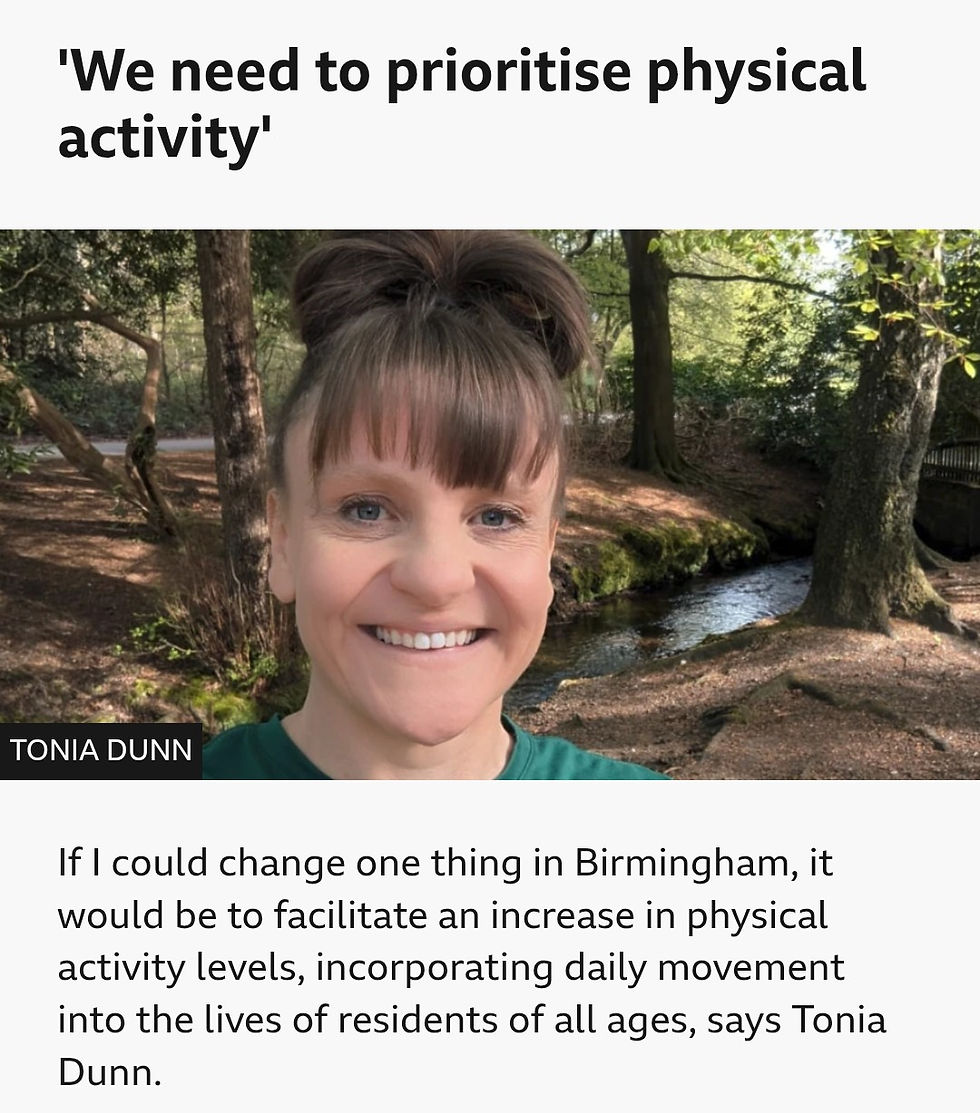
Tonia Dunn is a CIMSPA member, an Associate Member of the Faculty of Public Health, Advanced Personal Trainer Practitioner, Boxercise Instructor and Preventative Healthcare Coach based in Birmingham, UK.


Comments