


Trauma as a Barrier to Lifestyle Change. Why does trauma matter?


Have you ever wondered why it feels so hard to make lifestyle changes? Have you experienced traumatic events in your life?
Did you know that trauma can be felt in the body and in may have ongoing consequences for your nervous system?
This means that you may face additional barriers when trying to create changes, barriers that many standard systems do not effectively consider or address. The good news is, there is support available.
Firstly, let's consider, what is meant by trauma?
The list below is by no means exhaustive - because in fact, trauma can be felt as a result of a broad range of life events- but gives some examples (in no particular order):
Medical trauma i.e. birth trauma
Traumatic grief
Domestic violence
Bullying or school violence
Sexual abuse or assault
Historical trauma (Intergenerational trauma)
Life threatening events i.e. domestic violence, car acident
Neglect
It’s estimated that around 50-70% of people will experience a traumatic event at some point in their life, with around 33% of people developing PTSD (Post Traumatic Stress Disorder).
As someone who has experienced trauma and PTSD, both in childhood (ACEs (Adverse Childhood Experiences) and in my adult life, I have observed that many systems and spaces frequently overlook and fail to understand the barriers caused by the impacts of trauma.
For this reason, I have been invested in ensuring that I support my clients who have been through traumatic life experiences.
Of course, having lived experience of trauma has been a helpful guide and really shines a light on the lack of understanding of trauma within society, but it is important to note that everyone’s journey is unique.
My career path has frequently seen me work with people who have been through trauma. This includes young people - many of whom had difficult life experiences, with some who had been expelled from schools- (when I was a college lecturer and a volunteer with an activity group), new mums (when I worked in NHS breastfeeding support), plus five years of working with women who have experienced significant trauma (in a support group setting and 1:1). Most recently, I work on the NHS Diabetes Prevention Programme (since the beginning of 2024). I have also undertaken additional training to be able to work specifically with clients who have been through life trauma.
It is not just a case of being ‘trauma-informed’, it is about being trauma-aware and really taking the time to understand the needs of a client, how these needs may shift and change over time and what is possible for that person considering their life experiences.
In practice, it is about truly creating safe spaces, holding space and avoiding (where possible) ‘re-triggering’ the trauma; things that require a level of intuition, patience and empathy – things which take years to understand and develop and, crucially, cannot be taught on a cpd course in a few short hours.
What do I mean by ‘safe spaces’? I will explore this further in future blog posts but put simply – often when we have been through life trauma, it has somehow involved a crossing of our boundaries – these may be emotional, physical or psychological boundaries. Safe spaces take into consideration the impacts of trauma and create provision such that people feel able to safely participate and are less likely to have their trauma re-triggered. Holding space for a trauma survivor may mean a number of things including trying not to fix them, being there to listen without judgement, understanding what may or may not be possible (and that this can change), respecting someone’s boundaries – and crucially, understanding the different trauma responses.
It is also important to note scope of practice- as a health coach and personal trainer, I am not a therapist, so it is not my role to undertake therapeutic work which would involve revisiting the trauma. I am however able to create a safe environment for a trauma survivor and work with a person to understand what they really need to feel supported in making lifestyle changes. With this in mind, I can help you to feel safe in undertaking these changes whilst also supporting you to understand what is possible and how to make progress (at your own pace and whilst feeling safe).
You might also be interested in an earlier post I wrote in 2023 which gives an overview of how exercise can help with healing trauma PTSD & Exercise – Tonia Trainer

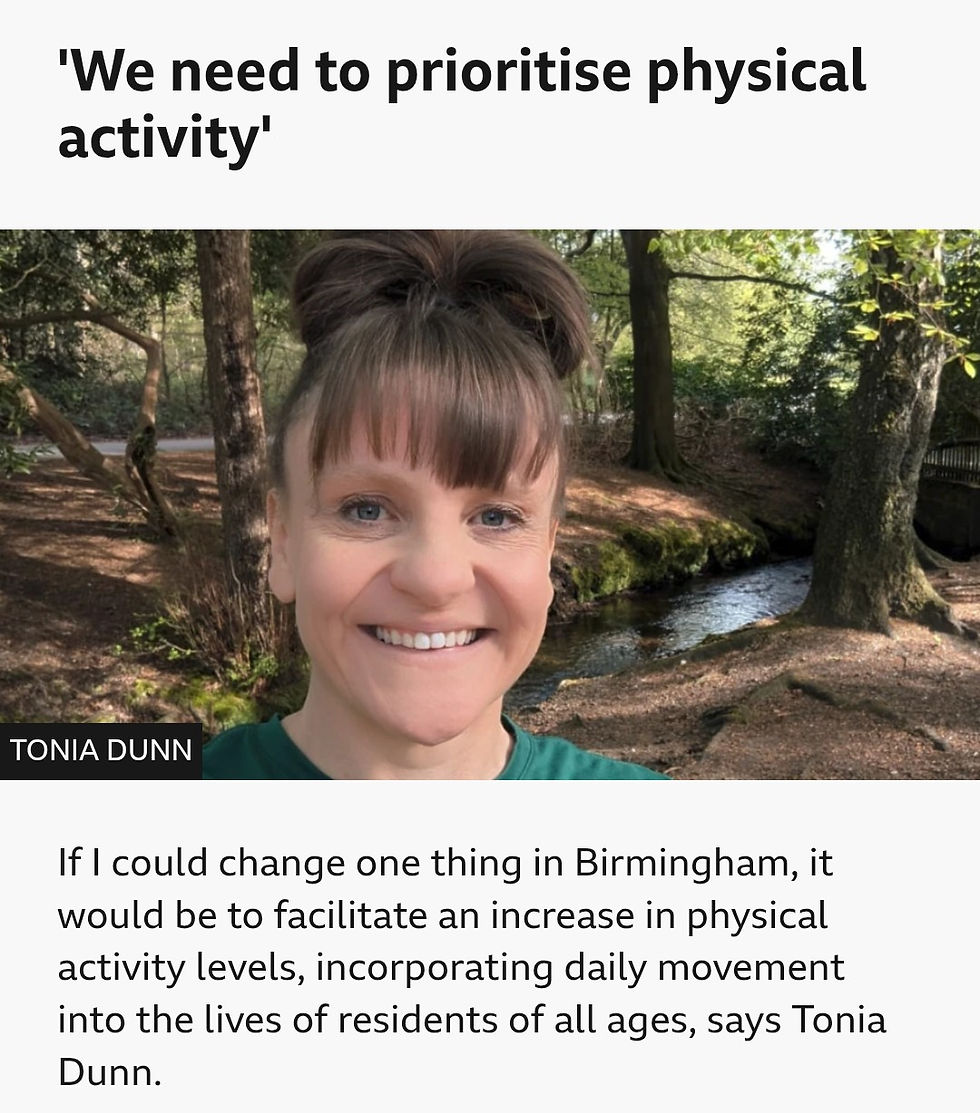
Tonia Dunn is a CIMSPA member, an Associate Member of the Faculty of Public Health, Advanced Personal Trainer Practitioner, Boxercise Instructor and Preventative Healthcare Coach based in Birmingham, UK.


Comments